
Whiplash-Associated Disorders (WADs)
WAD Definitions, Classifications, and Impact on Alberta Claims
“Whiplash” is a term most people have heard. However, the term “Whiplash-Associated Disorders” (WAD), its acronym, and the classification system often create confusion. This article explains what WAD means and how its classification affects motor vehicle accident claims in Alberta.
What Are Whiplash-Associated Disorders (WAD)?
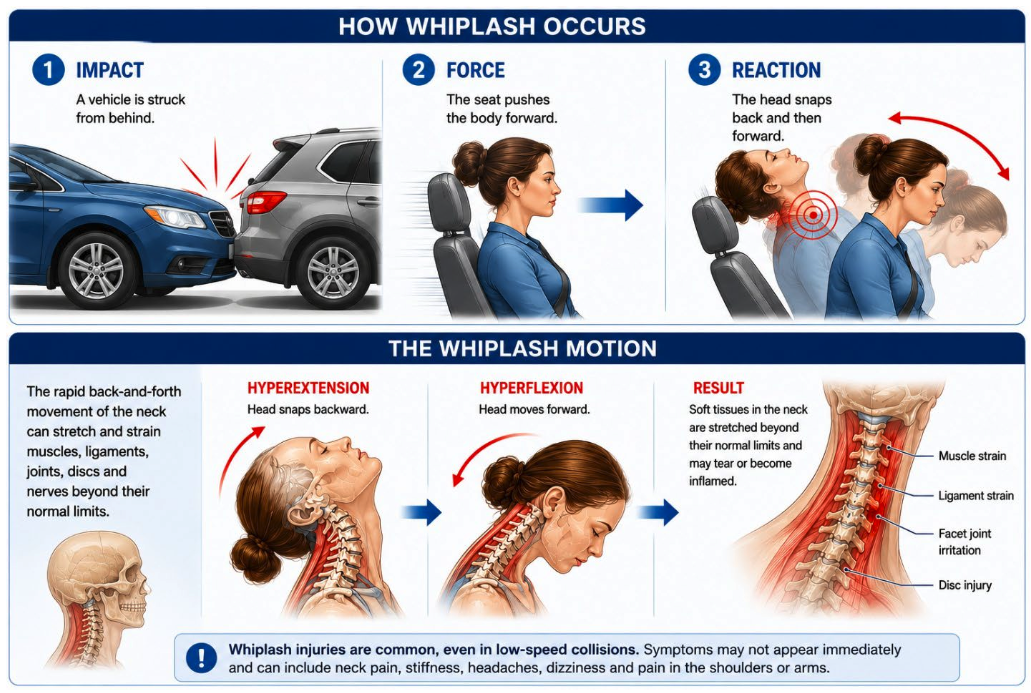
“Whiplash” describes the mechanism of injury, while “Whiplash-Associated Disorders” (WAD) refer to the symptoms and clinical findings that result from that injury. WAD injuries may occur when the neck and body are subjected to sudden acceleration-deceleration forces, such as in a motor vehicle collision. This rapid movement can place significant stress on the muscles, ligaments, joints, discs, nerves, and other soft tissues of the cervical spine.
WAD Classifications
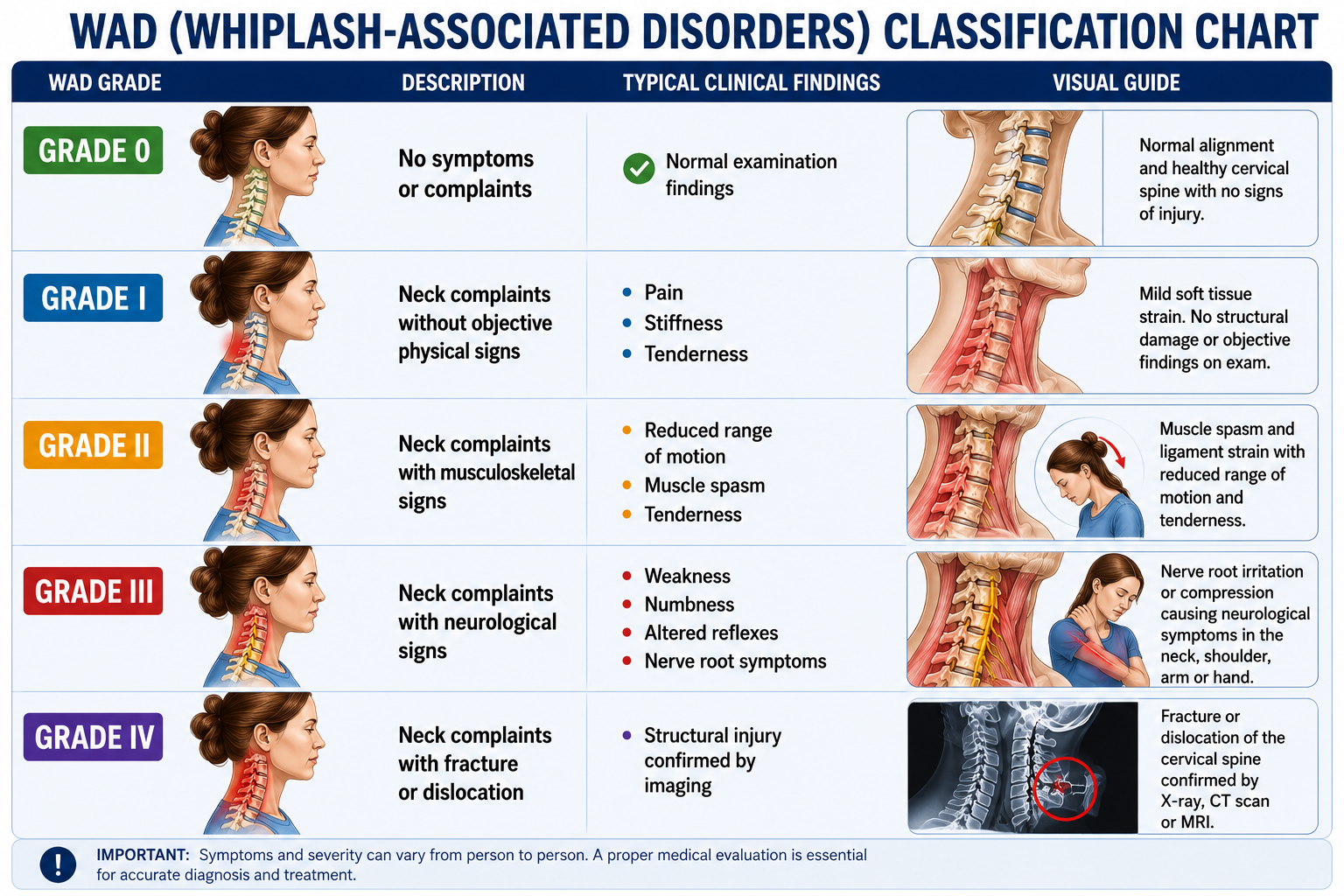
Healthcare professionals commonly classify WAD injuries using the Quebec Task Force Classification System, which remains one of the most widely accepted methods of1categorizing whiplash injuries. The classifications are as follows:
WAD I: Neck Pain with No Objective Clinical Signs
Definition of WAD 1
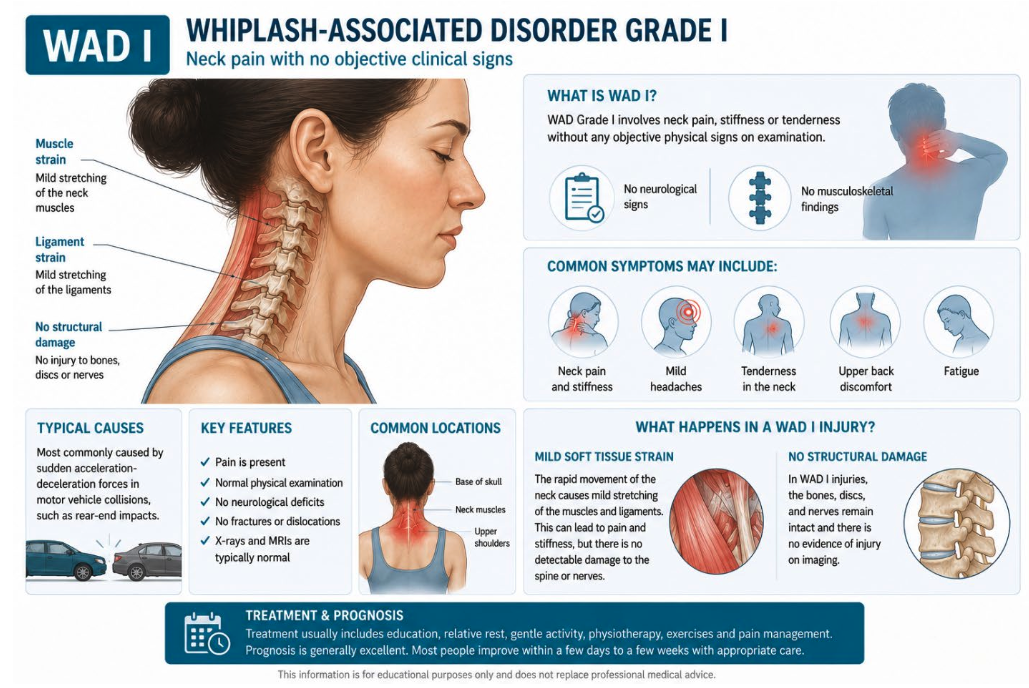
WAD I injuries involve complaints of neck pain, stiffness, or tenderness without objective musculoskeletal or neurological findings.
Common Symptoms
Neck pain
Neck stiffness
Mild headaches
Tenderness
Clinical Findings
Although symptoms may be present, physical examination findings are generally limited.
Typical Recovery
Most individuals experience substantial improvement within several weeks to a few months when appropriate treatment recommendations are followed.
WAD II: Neck Pain with Musculoskeletal Signs
Definition of WAD II
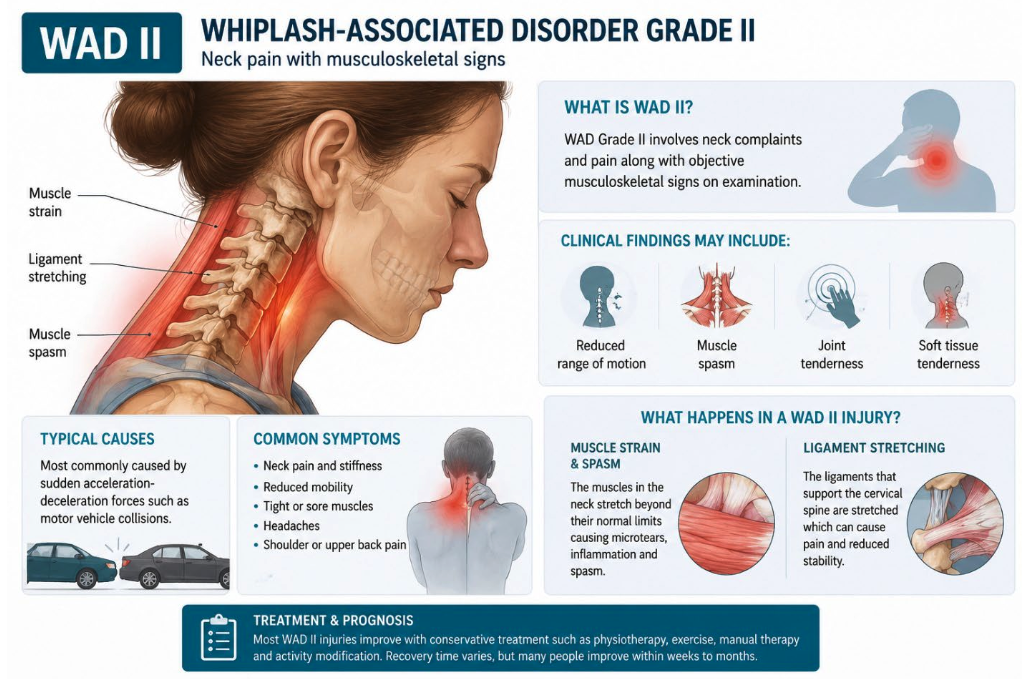
WAD II involves neck complaints accompanied by objective musculoskeletal signs.
Common Symptoms
Persistent neck pain
Reduced mobility
Headaches
Shoulder pain
Muscle tightness
Clinical Findings
Healthcare providers may observe:
Reduced cervical range of motion
Muscle spasm
Tenderness
Mechanical dysfunction
Typical Recovery
While many individuals recover within a few months, others may experience prolonged symptoms requiring ongoing rehabilitation and treatment.
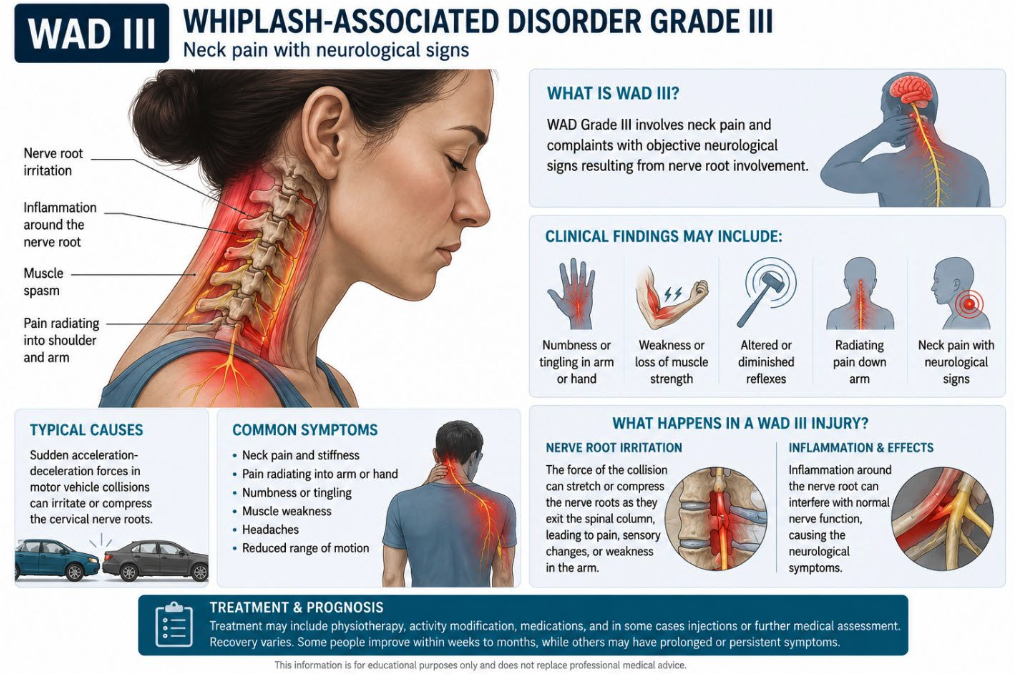
WAD III: Neck Pain with Neurological Signs
Definition of WAD III
WAD III involves neck complaints together with objective neurological findings.
Common Symptoms
Radiating arm pain
Numbness
Tingling
Weakness
Reduced grip strength
Clinical Findings
Examination findings may include:
Sensory deficits
Motor weakness
Altered reflexes
Evidence of nerve root involvement
Typical Recovery
Grade III injuries often require advanced diagnostic imaging, specialist assessment, and prolonged rehabilitation.
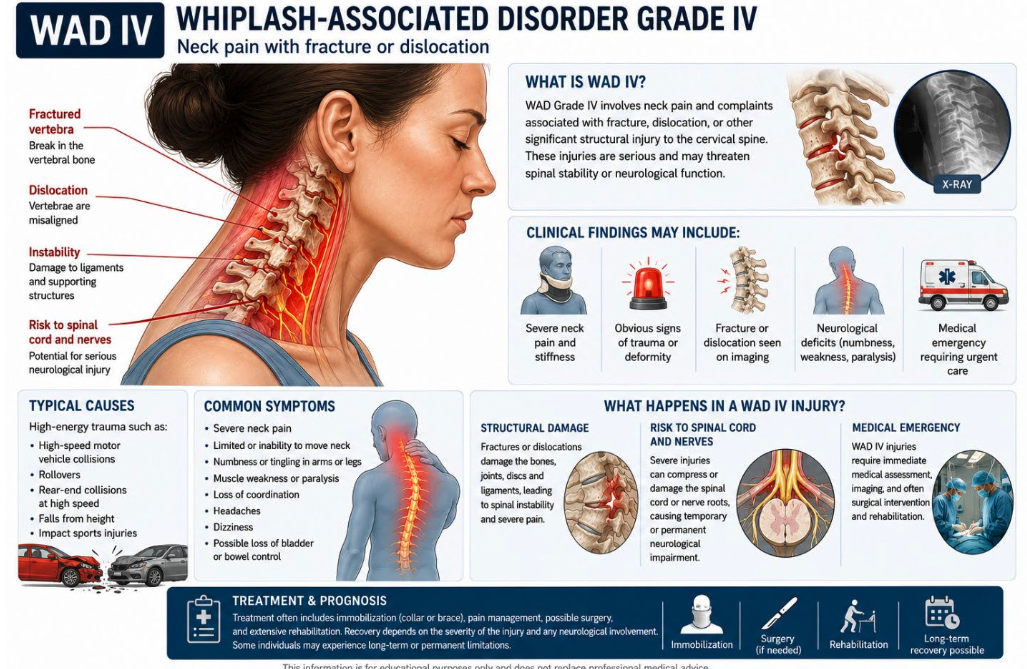
WAD IV: Neck Pain with Fracture or Dislocation
Definition of WAD IV
WAD IV involves neck complaints associated with fracture, dislocation, or other significant structural injury.
Common Findings
Vertebral fracture
Cervical dislocation
Instability
Potential spinal cord involvement
Clinical Significance
Grade IV injuries are medical emergencies that may require surgical intervention and extensive rehabilitation.
WAD Classifications Matters in Alberta
WAD grading is not only an important medical tool but also has implications in the insurance and legal context in Alberta. Following a motor vehicle accident, the accident benefits portion of an insurance policy includes treatment protocols for WAD I and WAD II injuries. The Diagnostic and Treatment Protocols Regulation (DTPR) provides a pre-set number of treatment visits (10 for WAD I or 21 for WAD II) within the first 90 days after an accident.
Treatment can continue beyond the DTPR limits if injuries persist and further care is required. WAD III and WAD IV injuries fall outside the DTPR, and treatment proceeds under standard accident benefit provisions.
In personal injury claims, WAD classification is one of several factors considered when assessing damages. The Minor Injury Regulation uses WAD classification to determine whether a claim is subject to a cap on non-pecuniary damages (pain and suffering). Generally, WAD I and WAD II injuries are subject to the cap unless an exception applies.
For a more detailed discussion of the Minor Injury Regulation, see: https://ofeelaw.com/articles/minor-injury-regulation-minor-injury-cap-alberta
Medical Disclaimer
This article is intended for general educational purposes only and should not be considered medical advice. Diagnosis and classification of Whiplash-Associated Disorders should be performed by qualified healthcare professionals based on an individual’s symptoms, examination findings, and medical history.
Legal Disclaimer
The information contained in this article is provided for general information purposes only and does not constitute legal advice. Every personal injury claim is unique. The value and outcome of a claim depend on the specific facts, medical evidence, and legal issues involved.
