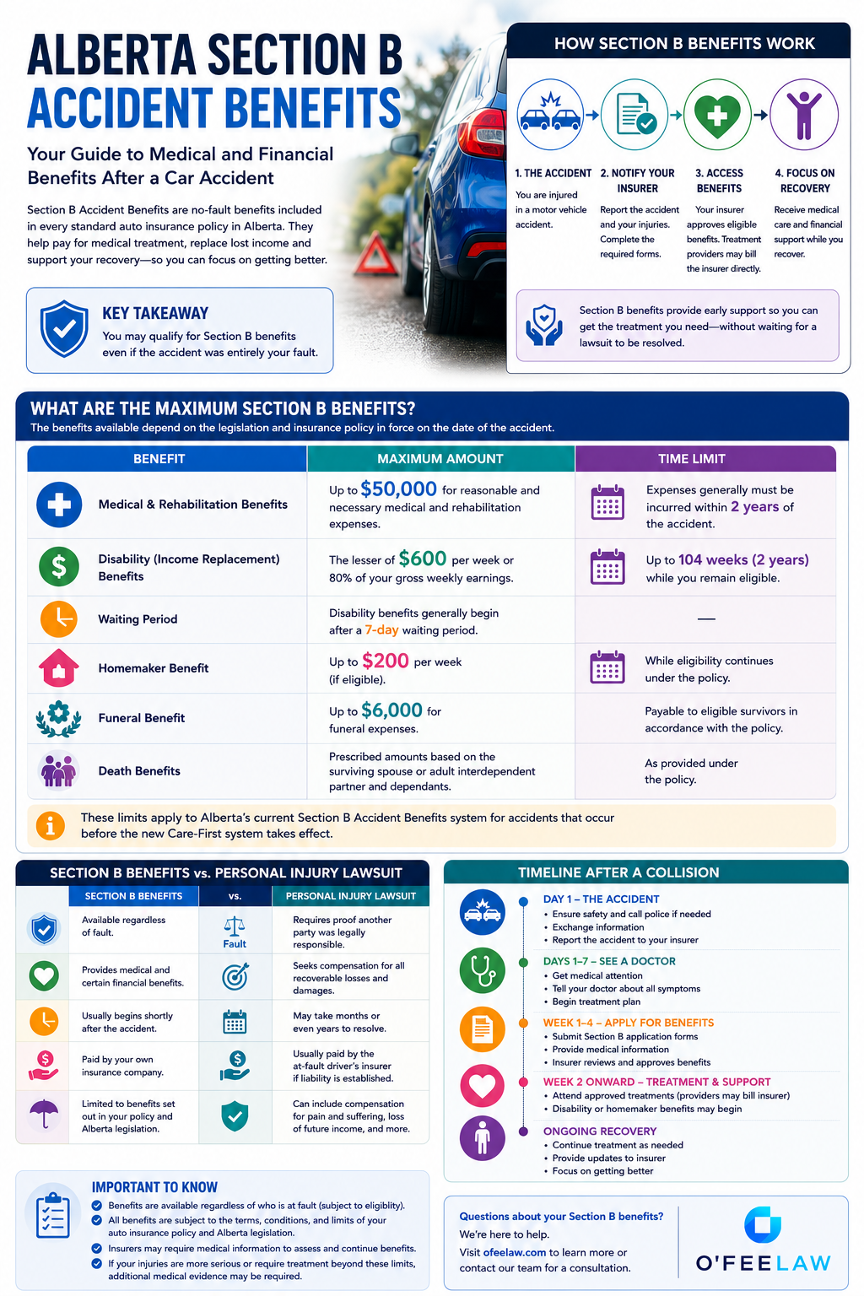
Alberta Section B Accident Benefits: Your Guide to Medical and Financial Benefits After a Car Accident
If you're injured in a motor vehicle accident in Alberta, one of your first concerns is likely how you will pay for treatment and replace lost income.
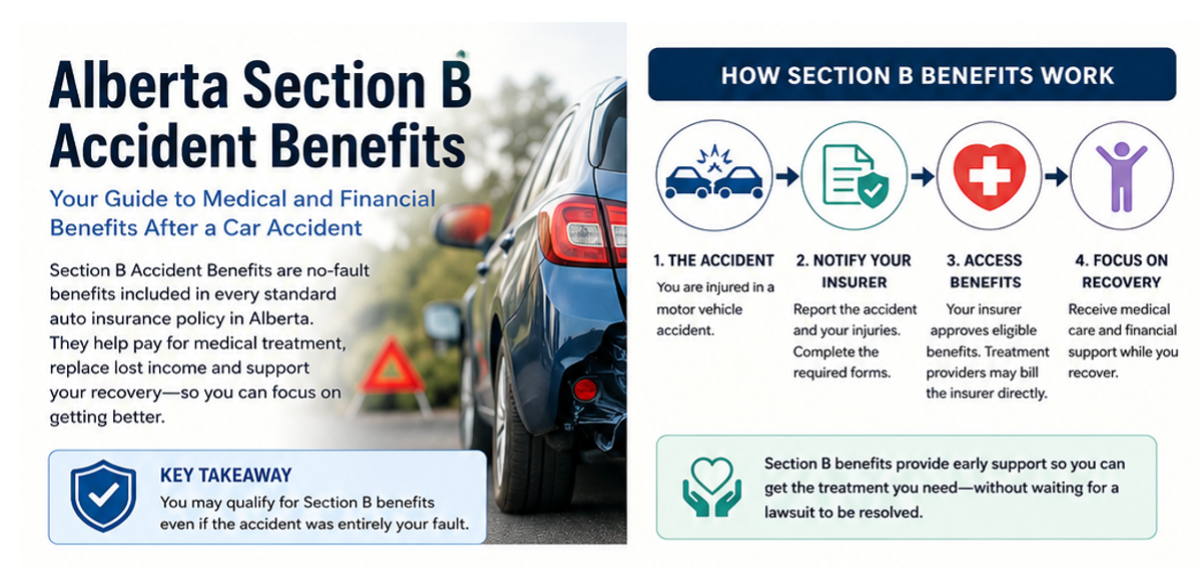
Every standard automobile insurance policy in Alberta includes Section B Accident Benefits, commonly referred to as Section B benefits. These are no-fault benefits, so they are available regardless of who caused the collision. This article explains what Section B benefits are, what they cover, how to apply, common mistakes to avoid, and how they differ from a personal injury lawsuit.
What Are Section B Accident Benefits?
Section B benefits are mandatory under Alberta's standard automobile insurance system. They are established through Alberta legislation and incorporated into every standard automobile insurance policy issued in the Province.
Their purpose is to ensure that people injured in motor vehicle accidents have access to medical treatment and certain financial benefits without having to wait for a lawsuit to conclude.
Unlike a personal injury claim against an at-fault driver, Section B benefits do not require you to prove that someone else was responsible for the accident. Instead, eligibility generally depends on whether your injuries resulted from the use or operation of an insured motor vehicle and whether you meet the requirements set out in the applicable legislation and your insurance policy.
Think of Section B benefits as your first source of assistance after an accident—they are intended to help you recover while any legal claim is being investigated or resolved.
Who Can Receive Section B Benefits?
Depending on the circumstances, Section B benefits may be available to:
Drivers
Passengers
Pedestrians struck by a motor vehicle
Cyclists involved in collisions with motor vehicles
Certain family members covered under the applicable insurance policy
Determining which insurance company is responsible can sometimes be complicated, particularly when multiple vehicles, policies, or out-of-province insurers are involved.
Medical and Rehabilitation Benefits
The Section B benefits most used pay for reasonable and necessary medical treatment following a motor vehicle accident. Depending on your injuries, these benefits may include:
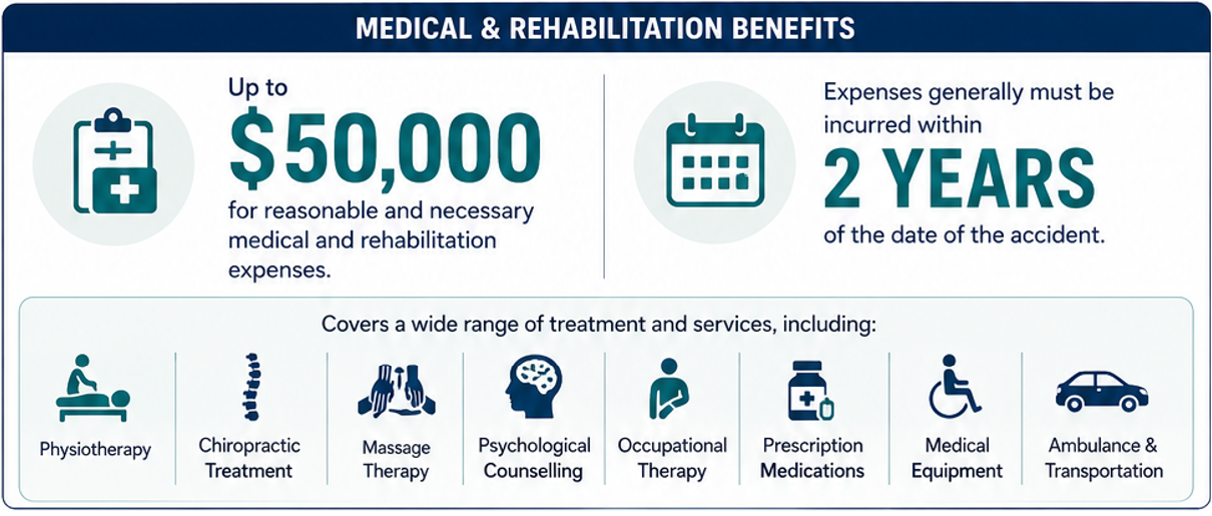
Once treatment is approved, many healthcare providers bill the insurance company directly, meaning you may not have to pay the cost up front. In other situations, you may pay first and seek reimbursement from your insurer.
Disability Benefits
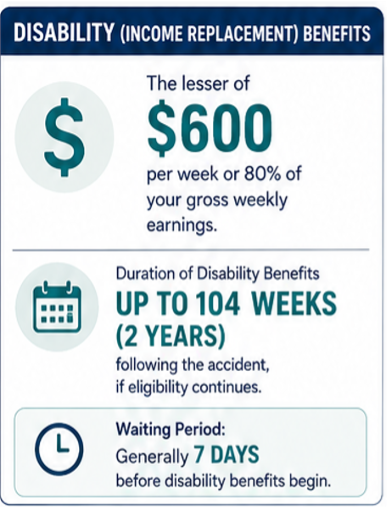
If your injuries prevent you from working, you may qualify for disability benefits that replace a portion of your lost income.
Eligibility depends on factors including:
Your employment before the accident;
Medical evidence confirming that you cannot perform your work;
The nature and duration of your disability.
The current benefit is the lesser of $600 per week or 80% of your gross weekly earnings.
Disability benefits generally:
Begin after a 7-day waiting period;
May continue for up to 104 weeks following the collision; and
Require ongoing medical evidence confirming that you remain unable to perform the essential duties of your employment.
Homemaker Benefits
Not everyone works outside the home.
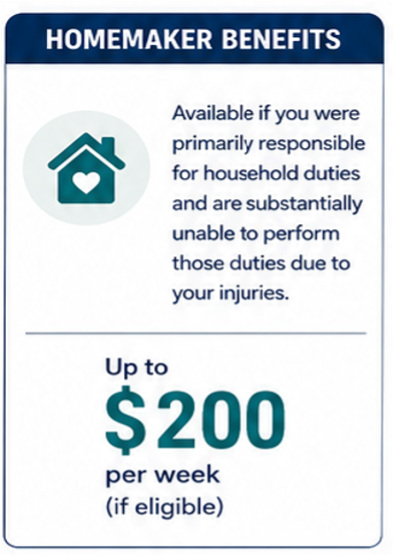
If you were primarily responsible for maintaining your household before the collision and your injuries prevent you from performing those responsibilities, you may qualify for homemaker benefits.
Eligible claimants may receive up to $200 per week, subject to the conditions set out in the policy.
Death and Funeral Benefits
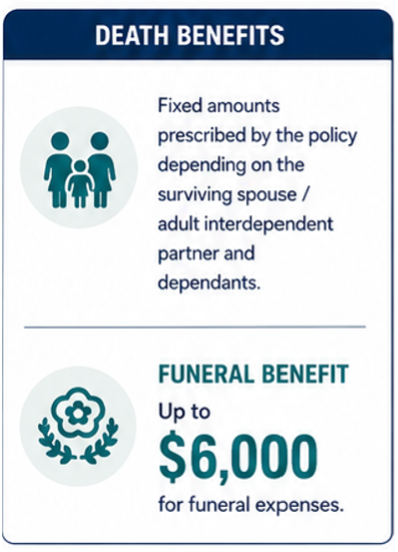
If a motor vehicle accident results in death, Section B provides benefits to eligible surviving family members.
Section B also provides financial assistance to eligible surviving family members.
Depending on the circumstances, benefits may include:
Funeral expenses of up to $6,000;
Payments to a surviving spouse or adult interdependent partner;
Payments for dependent children; and
Other prescribed death benefits available under Alberta's Standard Automobile Policy.
The amount payable depends on the claimant's relationship to the deceased and the applicable policy provisions.
Understanding Alberta's Diagnostic and Treatment Protocols
Many people injured in rear-end collisions suffer whiplash-associated disorders (WAD). To ensure injured people receive treatment quickly, Alberta introduced the Diagnostic and Treatment Protocols Regulation (DTPR).
If your injuries fall within these protocols, you may be entitled to an approved course of treatment without extensive delays or disputes over whether treatment should begin. If your injuries are more serious or do not fit within the protocols, your healthcare providers may recommend additional treatment or rehabilitation. In those cases, your insurer may request additional medical information before approving further benefits.
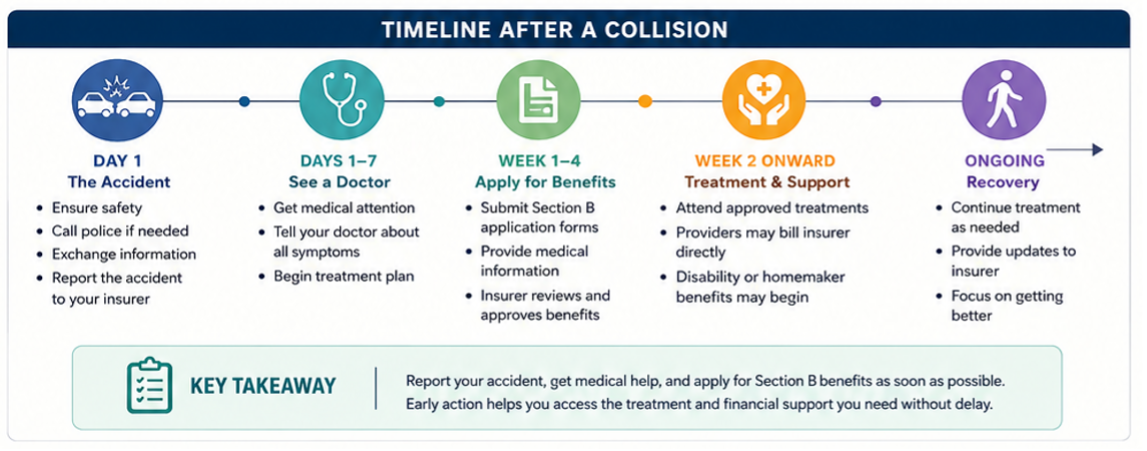
Timeline After the Collision
How Do You Apply for Section B Benefits?
Although every insurer has its own claims process, the general steps are similar.
Step 1 — Report the Accident
• Notify your automobile insurance company as soon as reasonably possible.
Step 2 — Report Your Injuries
• Explain every injury you believe resulted from the collision, even if some symptoms appear minor. Many injuries become more noticeable several days after an accident.
Step 3 — Complete the Required Forms
• Your insurer will provide application forms requesting information about:
The accident
Your injuries
Your employment
Medical providers involved in your care
Step 4 — Submit Medical Documentation
• Your physician or treatment providers may need to complete reports supporting your claim.
Step 5 — Continue Providing Updates
• As your treatment progresses, the insurer may request updated medical reports before approving ongoing benefits. Submitting forms and medical documentation promptly helps reduce delays in receiving benefits.
What Are the Maximum Section B Benefits?
Many people ask, "How much will my insurance pay?"
The answer depends on the type of benefit you are claiming, your injuries, and whether you continue to meet the eligibility requirements. The following summarizes the current Section B benefit limits for most Alberta motor vehicle accidents.
| Benefit | Maximum Amount | Time Limit |
|---|---|---|
| Medical & Rehabilitation Benefits | Up to $50,000 | Expenses generally must be incurred within 2 years of the accident |
| Disability (Income Replacement) | The lesser of $600 per week or 80% of your gross weekly earnings | Up to 104 weeks (2 years) while you remain eligible |
| Waiting Period | Disability benefits generally begin after a 7-day waiting period | -- |
| Homemaker Benefit | Up to $200 per week if eligible | While eligibility continues under the policy |
| Funeral Benefit | Up to $6,000 | Payable to eligible survivors in accordance with the policy |
| Death Benefits | Prescribed amounts based on the surviving spouse or adult interdependent partner and dependants | As provided under the policy |
Common Mistakes That Delay Benefits
Some of the most common problems include:
Waiting too long to report injuries;
Assuming the insurance company already has all necessary medical information;
Missing appointments with healthcare providers;
Stopping treatment prematurely;
Failing to tell healthcare providers about all symptoms;
Ignoring requests for additional documentation.
These mistakes do not automatically prevent you from receiving benefits, but they can complicate or delay your claim.
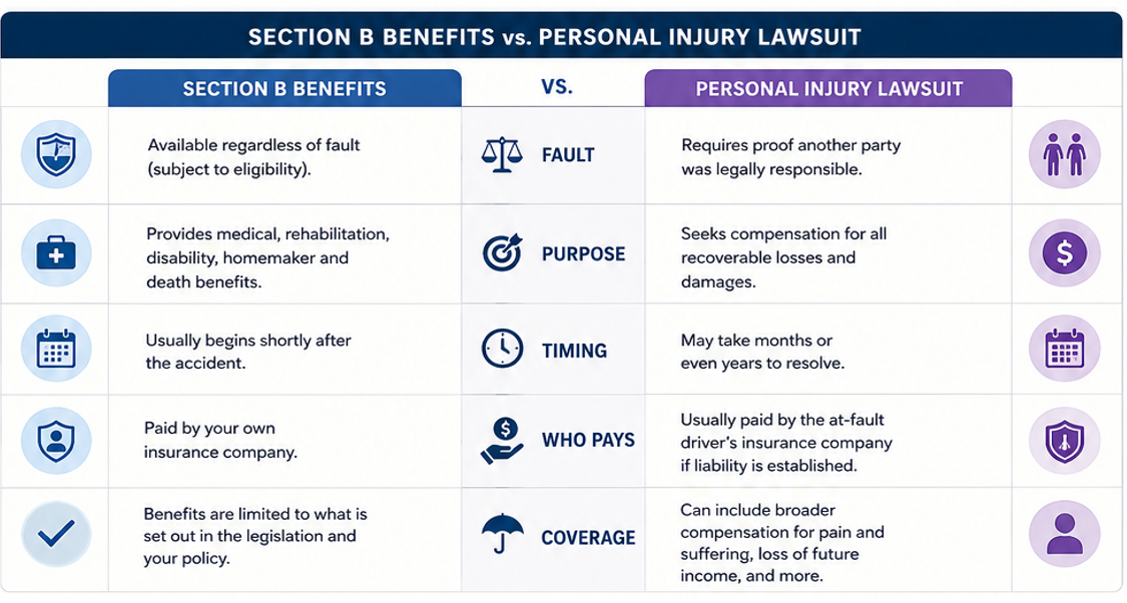
Section B Benefits vs. a Personal Injury Lawsuit
People often confuse these two processes. Many injured people receive Section B benefits while pursuing a separate personal injury claim.
What If I Have More Questions?
If you have questions about Section B benefits or personal injury claims do not hesitate to get in touch with our office for a free consultation. Visit the contact page, click the button below, or call (587) 316-2423.
Download a PDF summary sheet below courtesy of O’Fee Law for quick reference.